

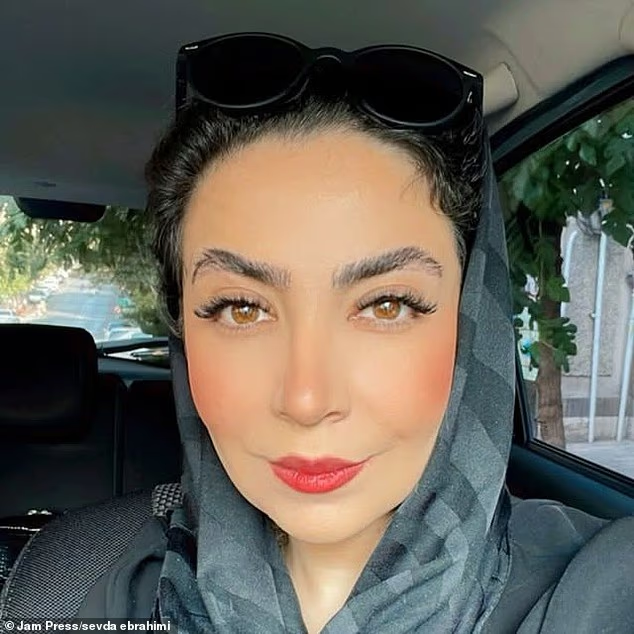
An Iranian blogger and social media influencer has reportedly been sentenced to death by a court in Bandar Abbas, after being accused of insulting Iran’s Supreme Leader and carrying out activities authorities described as threats to national security.
Soda Ebrahimi Shamsabadi, also known as Marzieh or “Sevda,” is being held in Bandar Abbas Prison, according to reports by Iran International and the Human Rights Activists News Agency (HRANA). The reports say her lawyer was notified of the sentence on August 23.
The case has drawn attention because of the severe punishment and the range of allegations reportedly brought against her. The sentence has been reported, but there is no indication in the available reports that she has been executed.
1. Blogger reportedly sentenced to death
READ ALSO: Real Warri Pikin Apologises After Timaya Lifts Her on Stage at AFRIMMA Awards
Iran International reported that Branch 3 of the Bandar Abbas Revolutionary Court sentenced Ebrahimi Shamsabadi to death on charges including “corruption on earth.”
The reports say the case also involved allegations of insulting Iran’s Supreme Leader, conducting media and propaganda activity against national security, and carrying out intelligence or security activities on behalf of hostile governments.
These are allegations reported by the news organisations and rights groups; they should not be treated as independently established facts.
2. A photograph reportedly formed part of the case
One allegation concerned a photograph Ebrahimi Shamsabadi allegedly took from a distance of a site struck by a missile.
According to information reported by Iran International and HRANA, authorities accused her of sending the image to a Persian-language media organisation based outside Iran.
The reports do not independently establish the circumstances in which the photograph was taken or how it was used. The allegation is part of the wider security-related case described by the sources.
3. She had shared a final message on Instagram
Before her detention, Ebrahimi Shamsabadi reportedly posted a message to her followers that was later described as a farewell note.
The post was quoted as saying: “If one day I leave this world, just know one thing – I chose the path I believed in.”
The message has attracted attention following news of the death sentence. However, the available reporting does not establish that she knew in advance that she would receive a death sentence when she published it.
4. Reports describe additional prison and property penalties
Alongside the death sentence, the court reportedly imposed prison terms ranging from two to five years, ordered the confiscation of her property and barred her from accessing certain government or public services.
Iran International reported that her lawyer was notified of the death sentence on August 23. The reports do not provide a clear account of whether an appeal has been filed or what further legal steps may be available to her.
5. Rights groups raise concerns about her treatment and health
HRANA reported that Ebrahimi Shamsabadi was held in solitary confinement for 20 days and faced severe pressure during interrogation.
The rights group also reported that she has multiple sclerosis and other health conditions, and that concerns have been raised about her physical condition in prison. These details come from rights-group reporting and have not been independently verified here.
What happens next?
The reported sentence has renewed concern about the use of capital punishment in cases involving political or security-related accusations in Iran.
Iran International reported that Ebrahimi Shamsabadi’s case is among several involving women facing death sentences in the country. HRANA has also documented death sentences in cases involving charges related to national security and freedom of expression.
The next developments may depend on whether the sentence is appealed, reviewed or otherwise challenged through Iran’s legal system. The available reports do not establish the current status of any appeal.
For now, the reported death sentence remains the central development in Ebrahimi Shamsabadi’s case. The allegations against her have not been independently established in this report, and further information from her lawyer, the court or rights monitors may clarify what happens next.


